Course Syllabus

SYLLABUS
Sustainable Food: Production and Consumption A
Semester & Location: |
Spring 2026 - DIS Copenhagen |
| Type & Credits: | Core course - 3 credits |
Study Tours: | This core course includes a mandatory study tour to Sicily during Travel Week 2. |
Faculty: |
Camilla Hoff-Jørgensen
|
Time and Classroom: |
Mondays 10:05-11:25 (classroom V10-A43) |
Major Disciplines: |
Environmental Studies, Sustainability, Food Culture Studies, and Policy |
Related Disciplines: | |
Program Contact: |
EPSsupport@dis.dk |
Photo: Authentic diverse wheat from the biodiversity festival held by Grønt Marked
Course description
It's possibly the greatest challenge of our time: to feed an ever-growing population without further destroying the planet. We need to do so under the growing pressure of climate change and scarce resources, with hardly any room for error. At the same time, our efforts are held up to increasing scrutiny on their social, economic, and environmental impact.
This course aims to shed light on this predicament by examining lessons from the past, and even more so, by exploring the possibilities of alternative food production and consumption methods. Solutions that recognize and address food's environmental and social impacts and seek to reshape our connection to food. This course will improve students' understanding of climate issues and local contexts regarding food production and consumption by visiting sites in Denmark and the region of Sicily, in Italy.
Critical questions include: What is the actual cost of food and natural resources? How can we achieve more sustainable diets while producing less waste? How can food activism make a difference? What do pioneering restaurants and food entrepreneurs teach us? How do cities help shape more sustainable food infrastructures? We will explore these questions in Denmark and in the rural Italian region. Denmark and Sicily differ in terms of climate, culture, and history. The Danish landscape is among Europe's most intensively cultivated areas, and Sicily is one of Italy's most cultivated regions, yet also in risk of desertification in 2/3 of the island. The agricultural land in Denmark covers approximately 62% of the area, while farmland represents 67% of Sicily's total land area. Sicily has a climate that enables the country to produce food throughout the year and export a substantial amount of fruit and vegetables to the rest of Europe. However, the region is experiencing an increasing number of wildfires, droughts, heat waves, and other symptoms of climate change. Areas around the Mediterranean Sea vary a lot. Some areas, such as the northern part of Spain and Italy, are regarded as progressive regions, with numerous sustainable food start-ups, a shift towards organic agriculture, and a strong narrative that connects identity to landscape. Other areas are classified as less developed regions, plagued by political and structural issues, and high unemployment. Sicily, Italy, is classified as the last.
This course connects principles from the physical and social sciences to address complex contemporary food issues. The field of sustainable food encompasses the study of basic principles of ecology and environmental science, as well as subjects such as ethics, anthropology, history, and politics.
During the core course week in Denmark and the study tour to rural Sicily, we will be hiking to some of the visits, so you will be required to bring practical clothing and footwear that will keep you warm and dry in cold weather. Even Spain can be windy in the spring, winter, and fall.
This course aims to:
- Increase food literacy through understanding the social, economic, and environmental impact of food production and consumption choices.
- Develop critical thinking skills through analysis and evaluation of sustainable food practices.
- Increase the capacity to take an active role in dealing with the challenges of our time by envisioning opportunities and challenging values.
Learning objectives
At the end of the course, the student can:
- Identify and map out the global challenges of sustainable food production and consumption.
- Define sustainable food production and consumption from multiple perspectives.
- Differentiate and compare types of sustainable food initiatives through their origins, advantages, and disadvantages, such as packaging, food miles, and food ethics.
- Critically evaluate evidence that supports or contradicts common, competing claims about food systems.
- Point out the possibilities of alternative food production and consumption approaches.
- List food strategies, diets, and sensemaking that contribute to a more sustainable food system.
Instructor
Camilla Hoff-Jørgensen, Cand. Scientist in Social Anthropology (Lund University), B.Sc. in Anthropology, and B.Sc. in Human Nutrition: Food Production (Copenhagen). She has worked with food and food culture at many levels, from the biochemistry of food nutrients to food production and distribution, to the cultural use of food in different contexts: Japan, Thailand, Spain, and Denmark. Besides working for DIS, she is an active independent researcher in anthropology and food culture studies. Her latest peer-reviewed article is Disgust, pleasure, and convenience in fast-food consumption: Perspectives from Danish middle-class parents
Office hours are held after class or by appointment.
Readings
- Willett, Walter (2019), Food in the Anthropocene: the EAT-Lancet Commission on healthy diets from sustainable food systems ́. The LanceW CRmmiVViRnV.
- EAT-Lancet Commission. (2019), The EAT-Lancet Commission - Summary Report Food Planet Health. ́ The LanceW CRmmiVViRnV.
- Rockström & Gaffney (2021), Feeding 10 billion people within the planetary boundaries
- Mann, Charles (2018 ), "The Wizard and the Prophet: Two Remarkable Scientists and Their Dueling Visions to Shape Tomorrow's World
- Paddock, Jessica. (2012), "Chapter 12 Marking the boundaries: position taking in the field of 'alternative' food consumption."
- Poore & Nemecek (2018), "Reducing food's environmental impact through producers and consumers"
- Raynolds et.al. (2020), "Routledge Handbook of Food Waste"
Field Studies & Guest Lecturers
Potential visits and guests include:
Havhøst (sea foresting trip): What's sustainable seafood fishing?
Vild mad (foresting trip) What strives in nature?
Modern Dairy Production. What is the future for cow milk and beef?
Meet a farmer who converted his conventional farm into an organic one
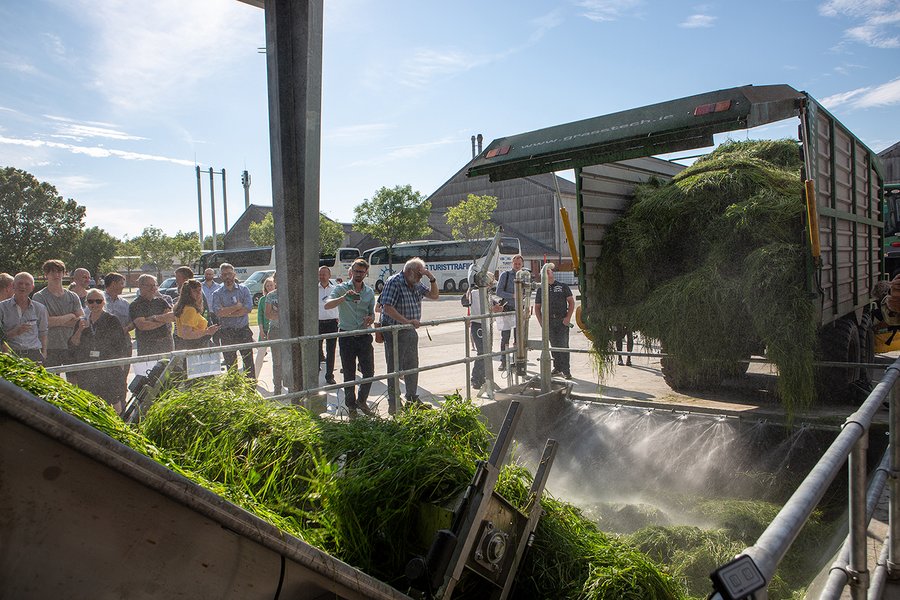 Finding an alternative protein to soy for feed
Danish Conventional pig farm
Urban gardens
Guided tastings

Fermentation workshops with legumes
Visit by Danmarks biggest agri lobby organisation
Photo: Ministry of Food, Agriculture, and Fisheries of Denmark
Approach to Teaching
The methods used to cover class materials include lectures, videos, discussions, individual and group presentations, guest lectures, and daily field trips. The course will include several out-of-classroom sessions on location, allowing students to experience the different facets of food firsthand and hands-on. Students are expected to be able to find and arrive at the external locations on time. The external locations will not be far from DIS's location, and maps and addresses will be provided in advance.
Expectations of the Students
I expect you to attend all class sessions unless you have an emergency. If you are not in class, you cannot participate. I expect you to complete all the assigned readings and come to class prepared to discuss them in depth. I expect you to turn in assignments on time.
All students are expected to have completed the course readings before class so that we can discuss the material at the right level. It is essential to be well-prepared for class, as I may randomly select students to present key points from that day's readings.
Students are expected to participate in all classes and field studies actively and to be open-minded to their fellow students' contributions to the class. The aim is to establish an environment where we can learn from each other and from the texts and cases we engage with, and you are expected to actively support this approach.
This course uses group work, a typical method in Danish education, to improve students' ability to contribute to a group, combine strengths, ideas, and perspectives (synergy), and, not least, to develop an understanding of one's own blind spots.
Evaluation
Students will be evaluated on their ability to understand, discuss, and communicate theories in the field of sustainable food, as well as to interpret them meaningfully. These skills will be the primary focus of evaluations.
Grading
Your final grade consists of the following three elements:
| Assignment |
Percent |
| Wizard/Prophet |
10% |
|
30% |
|
|
20% |
|
|
25% |
|
|
15% |
Areas to Cover
'Late papers will be accepted, but half a point for each day will reduce your grade for the paper if it is late, and if the course instructor is not informed about the delay.
Zoom meetings
Please email Camilla if you need to access the class over Zoom for one day.
Click here to join Zoom Meeting: 932 9389 6329
Laptop policy
This is a no-laptop-in-class course, and students will be given notebooks in the first lesson. In two classes, students are expected to bring their laptops during specific lessons as part of the preparation for the assignment on Lifecycle analysis in the 2nd block of the semester.
The AI policy in this course
It is strictly forbidden to use AI for writing any part of your assignments, but AI use for grammar errors or brainstorming before writing your papers are accepted.
| Volunteer Opportunities That Align With This Course: |
Students often want to volunteer while in Copenhagen. Below are some opportunities that might align with your course content. These are curated by the Academics Department, and not your faculty, so please reach out to mne@dis.dk if you have questions.
Cafe Mellemrummet by ActionAid About the Space & Opportunity: Mellemrummet is not your average café. It's an open, inclusive community space, run by a diverse group of volunteers. Whether you're passionate about climate activism, decolonial struggles, gender equality, or simply want to meet like-minded people, this is a space where you can engage, learn, and contribute. As a volunteer at Mellemrummet, you become part of an international and activist-minded community. You'll be trained to work café shifts (minimum 3 x 4-hour shifts per month), and have the opportunity to join or create events, contribute to communication, or support ongoing projects. Contact Information If interested, please reach out here and include that you are a DIS student here for the semester or year. https://www.ms.dk/en/mellemrummet/volunteer
In class, we have one mandatory shirt at MadBoks (29 Oct) and one mandatory shift at Grønt Market (21 Sep), but please feel free to volunteer at these places too. It will not free you from the mandatory days with the core course.
MadBoks About the organization & opportunity: Volunteer organization that saves and redistributes food surplus in Copenhagen. Join us to fight food waste! Sign up on your own, there are varying degrees of involvement expected from once a month to once a week, just remember to honor your commitments! Contact Information: Please contact them here to volunteer! https://facebook.us7.list-manage.com/subscribe?u=21366f082c5af1add473caecc&id=35fa4efaa0 If you have further questions, please contact Roxana at roxizlate@gmail.com. |
DIS - Study Abroad in Scandinavia - www.DISabroad.org
DIS Academic Regulations
Please make sure to read the Academic Regulations on the DIS website. There you will find regulations on:
Course Summary (external users)
If the Course Summary below is not loading, please find a full syllabus including Course Summary here.
Course Summary:
| Date | Details | Due |
|---|---|---|