Course Syllabus
Postcolonial Europe:Narrative, Nationalism, and Race |
 |
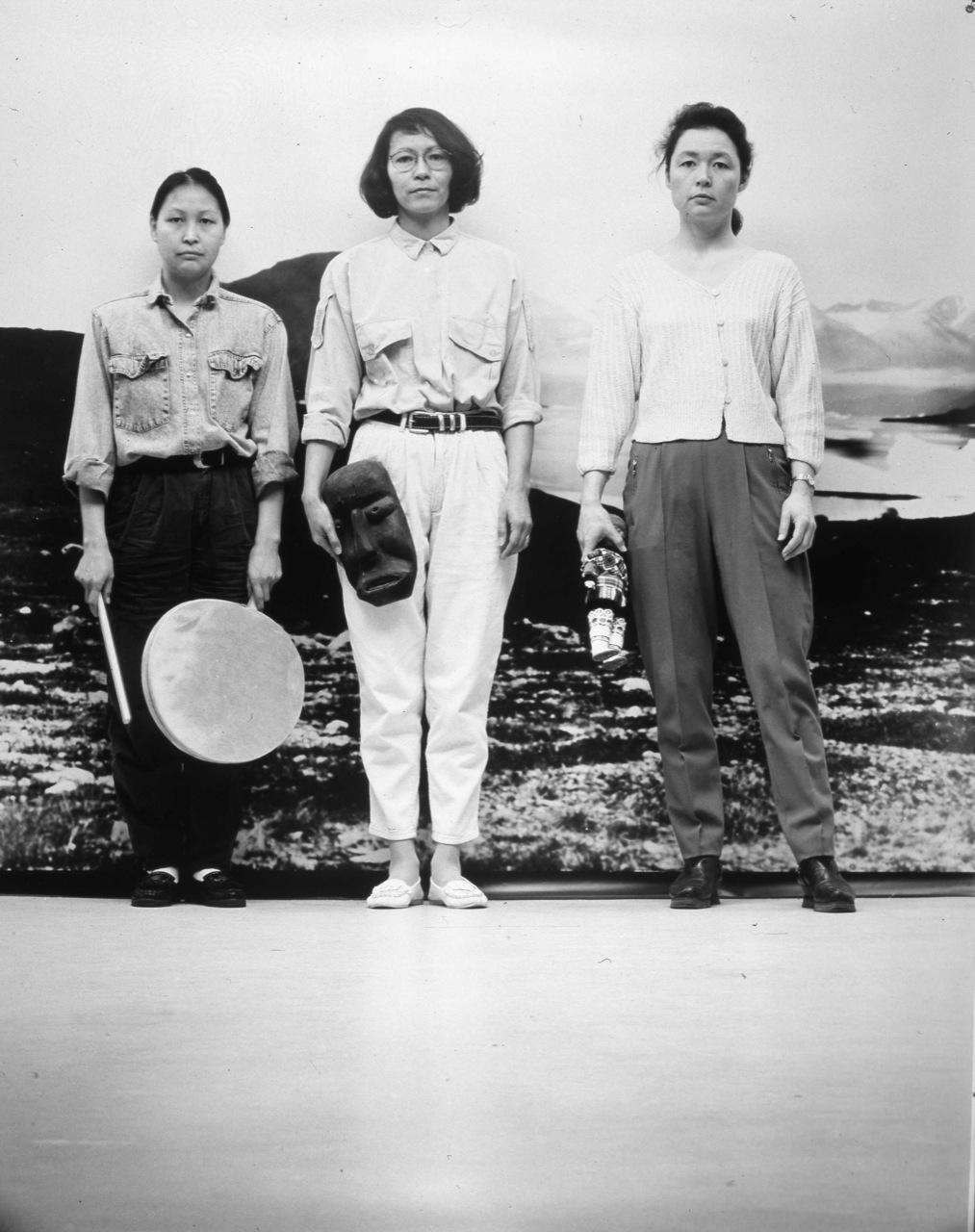
Pia Arke, The Tree Graces, 1993
| Semester & Location: |
Fall 2025 - DIS Copenhagen |
| Type & Credits: |
Elective Course - 3 credits |
| Major Disciplines: |
Literature, History, Anthropology |
| Prerequisite(s): |
None |
| Faculty Members: |
Mette Jungersen & Birgitte Duelund Pallesen, current students contact through Canvas Inbox |
| Time & Place: |
Mondays & Thursdays 11.40-13.00 in Vestergade 10-A41 |
Description of Course
In Europe, the colonial past has often been marginalized in the collective memory, as practices of imperialism and colonialism seldom fit into contemporary national narratives. Using the former Danish West Indies and Greenland as case studies, this course deconstructs colonial narratives in literature, film, art, advertisements, and historical works. Keeping a comparative perspective, we situate our discussions in current European debates about ‘the other.’
Learning Objectives of the Course
- identify colonial structures in today's society
- apply the methodology and theory of postcolonial studies
- identify colonial narratives via analysis of various cultural materials
- understand the interrelation between Europe's colonial past and current immigration issues
Faculty
Birgitte Duelund Pallesen Cand.mag. (Comparative Literature, University of Copenhagen and UCL London). Fields of interest: Postcolonial Studies, Critical Theory, Medical Humanities and Racism in Healthcare.
Mette Jungersen Cand. mag. (Russian Language and Literature, University of Copenhagen). Fields of interest: Postcolonial Studies, Cultural Studies, Literature and Language.
Office hours: by appointment
Approach to Teaching
Classes will begin with a lecture introducing the historical and/or theoretical framework of the particular theme studied during that class session. The remaining session will have an interactive and analytical approach. We will analyze movies, television series, literature, art, advertisement, and educational materials as well as historical works.
Expectations of the Students
This course is discussion-based and requires your active participation and engagement. You are expected to come well-prepared and ready to voluntarily contribute orally to each lesson by bringing the concepts discussed in class into play and sharing reflections on readings, how they relate to the real world, and how themes relate to topics you are exposed to through other courses or media sources. This also involves participating in online discussions (posted on the discussion site in Canvas).
Field Studies
We will be going on visits in the field, have guest lecturers in order to investigate key course themes within local community organizations and institutions.
Grading
| Assignment |
Percent |
| Participation |
30% |
|
Voices from the Colonies: The National Museum |
25% |
| Decolonial Mapping: Pia Arke |
25% |
|
Research Proposal |
20% |
To be eligible for a passing grade in this class you must complete all of the assigned work.
Literature
The following titles are examples of readings, not a complete list. Readings include (excerpts from):
Ahmed, Sara, “A Phenomenology of Whiteness”, Sage Journals, 2007.
Andersen, Astrid Nonbo, “”We Have Reconquered the Islands”: Figurations in Public Memories of Slavery and Colonialism in Denmark 1948-2012”, Springer Science+Business Media, 2013.
Anderson, Benedict, Imagined Communities, Verso Book, 1991.
Arke, Pia, Stories from Scoresbysund, Borgen 2003
Arke, Pia, Ethno-Aesthetics, Kunsttidsskriftet ARK, Pia Arke Selskabet & Kuratorisk Aktion, 2010
Belle, La Vaughn, Tami Navarro, Hadiya Sewer, and Tiphanie Yanique, “Ancestral Queendom,” Nordisk Tidsskrift for Informationsvidenskab og Kulturformidling 8(2), 2020.
Bhabha, Homi K, “Narrating the Nation” in Nation and Narration. Routledge, 1990.
Bhambra, Gurminda K., Postcolonial Europe: Comparative Reflections after the Empires. Routledge, 2020.
Brown, Lesley-Ann, Blackgirl on Mars. Repeater Books, 2023.
Butt, Clarke, and Krampe, Introduction in Rethinking Postcolonial Europe: Moving Identities, Changing Subjectivities special issue of Postcolonial Interventions, vol. VII issue 1, pp. 14-33
Danbolt, Mathias, “Colonial Ignorance and Racialized Affective Consumption in Danish Public Culture”. Nordic Journal of Migration Research, 2017.
Dirckinck-Holmfeld, Katrine, and Julie Hardenberg. “Nipangersitassaanngitsut // Those Who Can’t Be Silenced.” Julie Edel Hardenberg, Nipangersitassaanngitsut // Those Who Can’t Be Silenced, 2023.
Egede Lynge, Aviâja, “The Best Colony in the World,” in Rethinking Nordic Colonialism: A Postcolonial Exhibition Project in Five Acts : Iceland, Greenland, the Faroe Islands, Finnish Sápmi & Denmark, Finland, Norway, Sweden, Nordic Institute for Contemporary Art, 2006
Graugaard, Naja Dyrendom and Høgfeldt Ambrosius, Amalie, “The Silenced Genocide,” Kvinder, Køn og Forskning, no. 2, 2023
Hansen, Stine Lundberg and Hasle Gudrun, Erfalasoq/Flag, Nuuk Art Museum, 2021.
Hooks, bell, Eating the Other: Desire and Resistance. Routledge, 2014.
Jensen, Lars, “Postcolonial Denmark Beyond the Rot of Colonialism”, Routledge, 2016.
Jensen, Lars, Whiteness and Postcolonialism in the Nordic Region, “Danishness as Whiteness in Crisis”. Ashgate Publishing Limited, 2012.
Korneliussen, Niviaq, Last Night in Nuuk. Black Cat, 2019.
Korneliussen, Niviaq, The Flower Valley, Gyldendal, forthcoming.
Körber, Lill Ann, “Figuration of the Hybrid. Julie Edel Hardenberg's Visions for a Post-Postcolonial Greenland”. Aarhus Universitetsforlag, 2011.
Odumosu, Temi, “What Lies Unspoken, A Remedy for Colonial Silence(s) in Denmark”. Taylor & Francis, 2019.
Odumosu, Temi, “Open Images or Open Wounds: Colonial past and presence in the city of Copenhagen,” in Openness: Politics, Practices, Poetics, Ed. Susan Kozel, Living Archives, 2016.
Said, Edward W., Orientalism. Penguin Books, 2003.
Yanique, Tiphanie, Land of love and drowning. Riverhead Books, Penguin Books, 2014.
Young, Robert C., Postcolonialism: An Historical Introduction. Blackwell Publishing, 2004.
Wekker, Gloria, White Innocence: Paradoxes of Colonialism and Race. Duke University Press, 2016.
Academic Regulations
Please make sure to read the Academic Regulations on the DIS website. There you will find regulations on:
DIS - Study Abroad in Scandinavia - www.DISabroad.org
Course Summary:
| Date | Details | Due |
|---|---|---|